“For IDS22, I wanted to introduce a way of decorating that treats walls less like background and more like an expression of who lives in the space”
— Roman Gutyrya
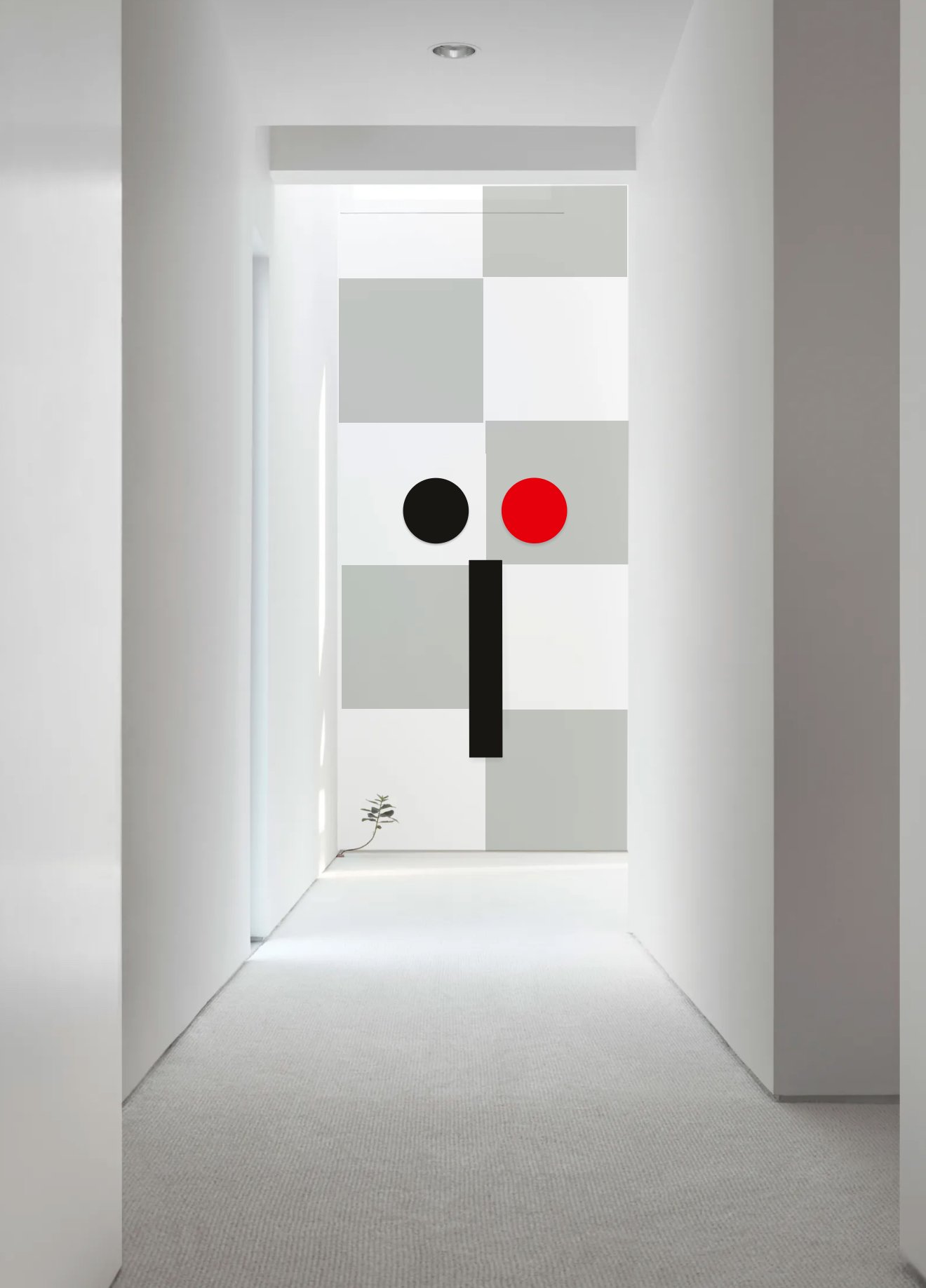
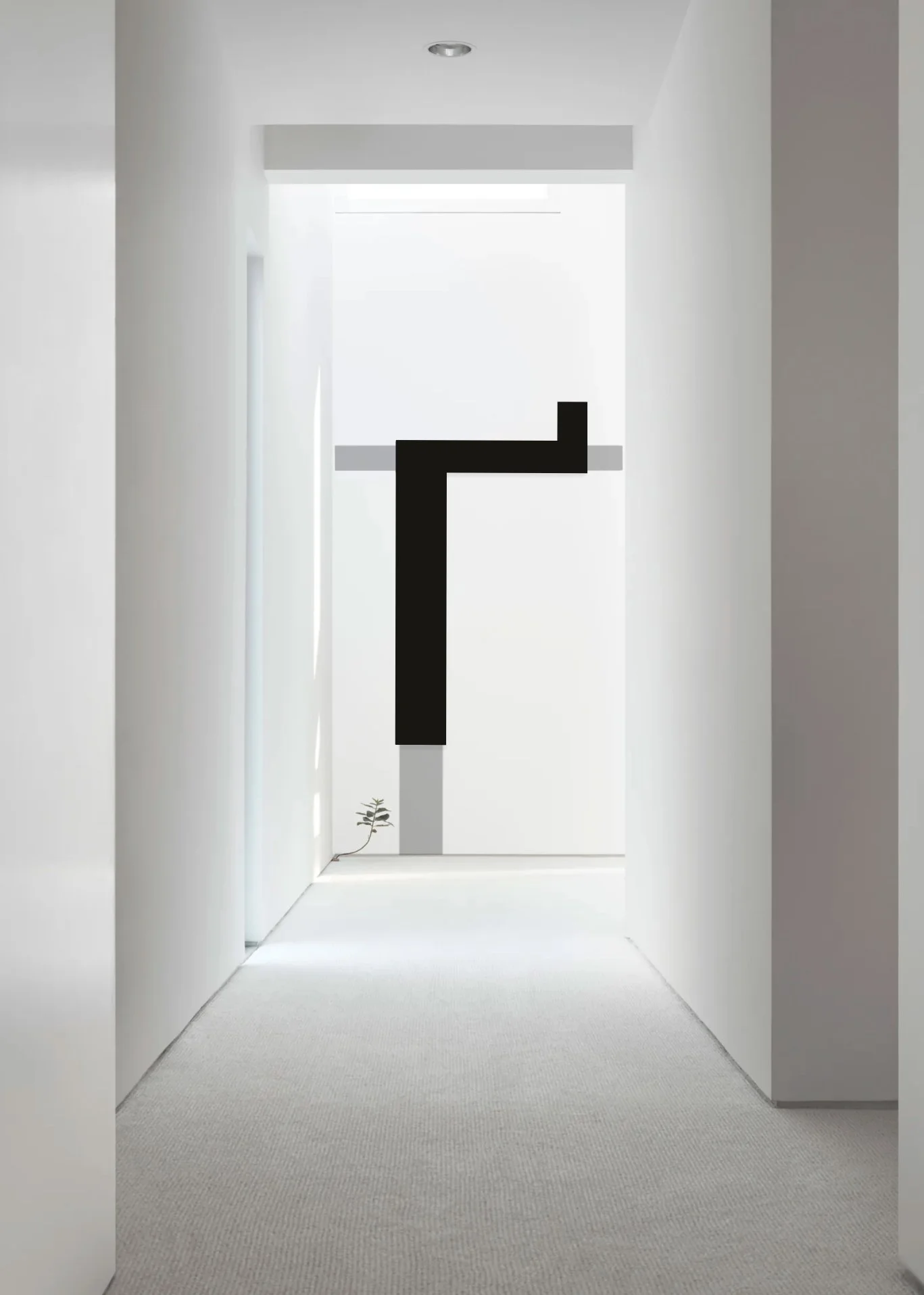
For the 2022 Vancouver Interior Design Show, Roman Gutyrya created three contemporary wall works that explore identity within the discipline of interior decorating.
Responding to the 2022 invasion of Ukraine, he became his own client, using his cultural roots as the source of the designs.
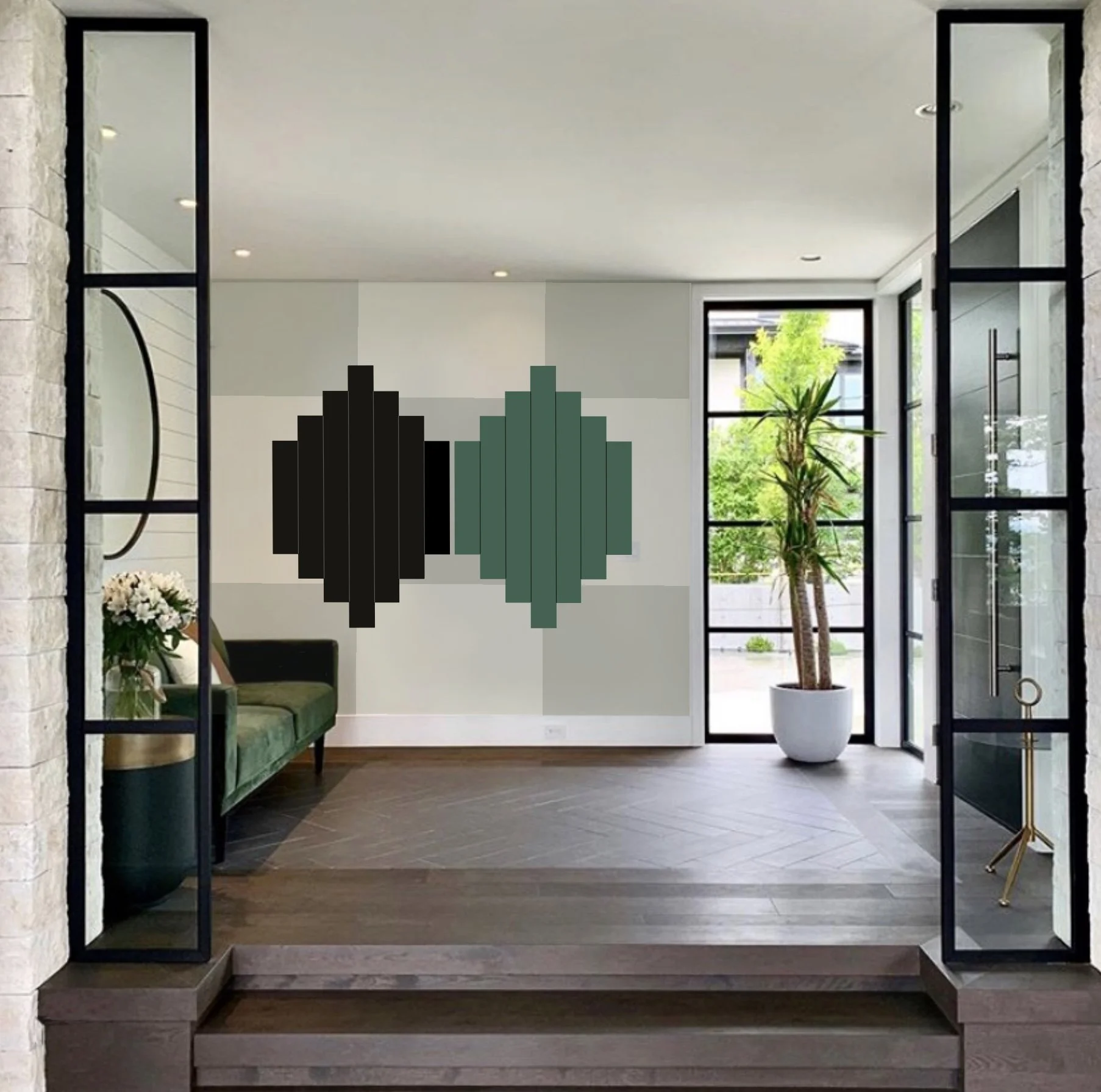
Two panels that flank his installation reinterpret the letters Ї and Ґ, symbols unique to the Ukrainian language. The central panel draws from regional embroidery linked to Gutyrya’s maternal grandfather’s birthplace, with an off-white “linen” ground that treats the walls like garments.
Together, this composition offers a personal portrait—an expression of Roman’s approach to “dressing walls” with meaning, memory, and individuality, thereby creating unique, personalized environment or as he likes to say:
“Interiors that speak your language”

“For me, as a Ukrainian Canadian, 2022 has been a year of rupture. When Russia invaded my birthplace. I wanted to respond not only as a friend, a son, and a brother, but as an artist. I turned inward and asked:
What does it mean, for me, to be Ukrainian?
The three wall works in this booth grow out of that question.”

“The answer began with language. Ukrainian language, for me, is sound, rhythm, and identity.
It’s also at the heart of the current conflict, where one culture is trying to erase another and deny its language as “real.”
Two of the wall works are based on letters from the Ukrainian alphabet – Ї and Ґ – which distinguish Ukrainian from other Cyrillic-based languages. They are quiet but firm statements of difference and presence: simple shapes that carry the weight of history, sound, and pride. Symbolically, letter ï is in the name of Ukraine - “Украïна” - and in the name of its capital Kyiv - “Киïв”.
Both shapes were rendered in engineered composite boards as minimal contemporary wall sculptures.
The central diptych - two shaped composite board panels set in shallow relief against a diagonal checkered hand-painted pattern - represents flower petals on a traditional embroidered cloth called rushnyk.
This wall work draws from traditional embroidery and national costume, using motifs from a book of textiles collected in the region where my grandfather was born. The off-white background references linen; the wall becomes like a garment, dressed in symbols.”


“Together, these works are both a personal portrait and a prototype: a glimpse of how walls can hold our stories, our heritage, and our individuality in a contemporary interior.”