
In a way, my world is getting smaller. And I love it.
We live on Arbutus Street, near Connaught Park in Vancouver. For over two years, our son Martin went to daycare in Richmond—a thirty-to-forty-minute drive each way.
You guessed it: nothing in our neck of the woods either had a spot or was affordable.
Then a daycare reopened at the Kitsilano Community Centre, a ten-minute walk from home. Martin got accepted. He started this week, and it still feels like a dream come true.
Something similar happened with our family doctor. After ten years of driving to White Rock for appointments, a clinic opened just up the street—and we got in!
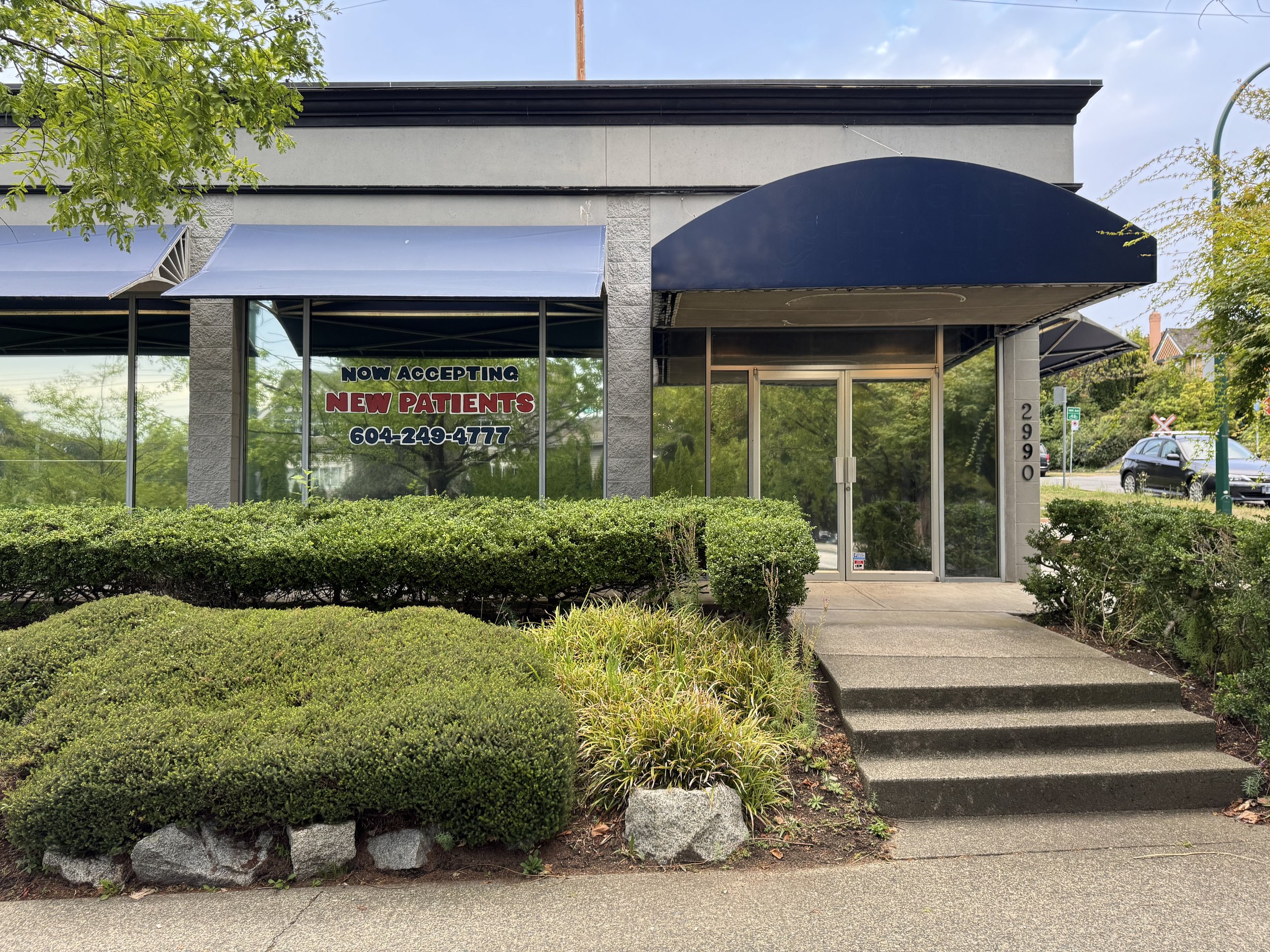
And then there’s the building near Arbutus and 16th, across from Loblaws.
For about a decade, it housed a developer’s presentation centre. We passed it every day on the way to daycare. Recently, the enormous property renderings came down, and a discreet new sign appeared by the entrance.
I looked it up.
The building is now home to FutureLab Makers, a nonprofit that provides training and employment for people facing barriers to work, restores vintage mid-century furniture, and houses artist studios.
A showroom, a workshop, and studio space all in one - a category or its own.
I decided to stop by and say hello.

On a sunny Thursday morning in late August, coming back from one of our last daycare drop-offs in Richmond, I parked outside and knocked.
A tall woman with a big, broad smile came out to greet me. This was Saskia, the founder. There was something grounding and no-nonsense about her. Overalls, sleeves rolled up, clearly in the middle of a refinishing project.
I told her I lived down the street and was an artist with a studio in the neighbourhood. She offered to show me around.
We started in the workshop, where stripped dressers stood with their drawers set neatly beside them.
It turned out we had more than one thing to connect over. I’d refinished my own vintage dresser years ago, and cabinet refinishing is still part of my painting business.
So we talked shop: sandpaper grits, spray equipment, dustless sanders.
I told her how I’d once sanded a little too much and nearly gone through the veneer at the edges.
She nodded and smiled.
“You have to be really careful there.”
_____________________________
Eventually, she asked about my creative work.
I told her I create custom murals and painted designs, sometimes incorporating canvases or wood panels. Then I pulled out my phone and showed her “Abundance,” the piece I exhibited at the Interior Design Show in 2024.
Soft pastel shapes, like smiles or halves of fruit, against forest green. Some painted directly on the wall, others cut from wood and mounted above the surface.
She leaned in and said she liked it.
I told her I was looking for new walls to create on, beyond the homes and businesses I usually work in.
She paused. She had a few that could probably use something.
Meanwhile, my mind was already going. This happens when I enter a new space—as if a switch goes on. Mid-century walnut, tall neutral walls, colours and graphic patterns from that period. How could a wall design bring it all together?
One wall stood out: about eight feet long and ten feet tall, with open space on one side and street-facing windows on the other.
Saskia was interested in exploring that one.
_____________________________
A table, two chairs, and a large wood-framed mirror stood against it. The mirror gave the room depth—that was why Saskia had put it there, and it worked.
But it would also cover most of a painted composition. We moved it aside, along with the table and chairs.
I asked whether she’d like to choose a piece of furniture for the design to respond to.
We narrowed five candidates down to two, then chose the smaller dresser.
It was still heavy.
We carried it together. My fingers were hooked under the top edge, and Saskia seemed to be managing with ease. I mentioned her strong hands.
She rock climbs, she told me.
I took photographs of the dresser against the wall. On the way back, she suggested we lift it from the bottom.
It was much easier to carry.
_____________________________
Before I left, Saskia asked whether I might also want to display some of my own work. A signature design, perhaps.
I hadn’t expected that. It’s still sitting with me.
Alongside decorating, I’ve been developing an art practice, with more than a handful of panels in various states of completion. But I’m used to responding to a space—the furniture, the light, the people. What would I bring as a piece of my own?
I don’t have an answer yet.
What I could already see was a vignette: a place worth photographing, where the wall would make the furniture look better and the furniture would make the wall look better.
Saskia said she was open to whatever I created and looked forward to seeing what it became.
So we decided to give it a try.
In part two, I’ll take you through the research, the thinking, and the design of that wall.